When the Line Looks Smooth but the Pain Runs Deep
A line that ships on time isn’t always a line that runs right. In cylindrical cell plants, that truth gets loud at shift change, when handoffs meet hidden lag. With Automated Battery Production, you expect clockwork flow, yet the data pushes back: OEE slips 6–8% after recipe swaps, scrap nudges up 3.2% around tab welding, and a quiet queue forms near formation—funny how that works, right? So here’s the question that matters: are we optimizing for headline speed while micro-frictions eat yield, uptime, and trust? Look, it’s simpler than you think, and it starts with seeing what the dashboards don’t say outright.
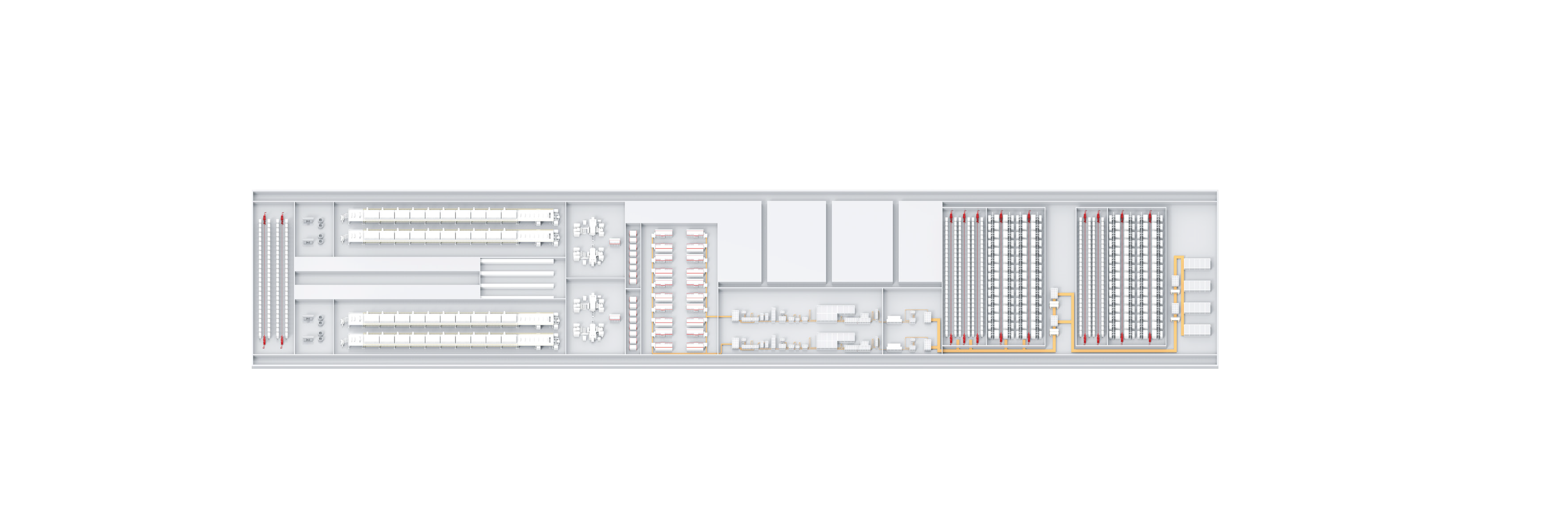
Where do the bottlenecks hide?
They hide in “good enough” routines that break under mix and scale. Statistical process control (SPC) is often batched, so drift between roll-to-roll coating and winding sneaks through before alarms trigger. Changeovers rely on tribal settings, so camera offsets and tab welding energy windows wander by a few basis points—small on paper, big in rework. Power converters add electrical noise that skews low-cost sensors, while edge computing nodes sit one cell late, not one station early. Meanwhile, the manufacturing execution system (MES) logs events after the fact, so operators wait for red lights instead of nudging the line back to center. Each piece seems minor. Together, they bend takt, stress crews, and blur traceability when audits hit. The fix isn’t “more speed.” It’s tighter feedback, nearer the tool, with less ritual and more real-time truth (and less guesswork on Friday nights).
What’s Next: New Rules for Smarter Cylindrical Cell Factories
The forward path is not mystery; it’s mechanics. Build control where variation starts, close loops where value flows, and let software prove it every minute. In next-gen Automated Battery Production, station-level vision measures weld nugget geometry in-line and adapts parameters on the next part, not the next shift. Edge computing nodes pre-filter signals to denoise harmonics from power converters, so force, temperature, and alignment stay trustworthy. Recipes become adaptive—guarded by SPC that streams to MES in milliseconds—so roll-to-roll coating, slitting, winding, and insertion move as one, not as neighbors. Add a lightweight digital twin to simulate the impact of a recipe tweak before it touches copper or steel—then commit, track, and learn. The result we’ve seen in comparable deployments: 18–25% faster changeovers, 30–40% fewer micro-stops, and a steadier OEE curve across high-mix SKUs— and yes, it stacks.

Real-world Impact
Summing up the shift: we traded brute speed for stable velocity; we replaced after-the-fact alarms with near-tool feedback; and we turned operator firefighting into guided adjustments. To choose well, use three metrics that don’t flinch. 1) Closed-loop coverage: what share of critical stations (coating, tab welding, formation) self-correct within one cycle? 2) Latency to insight: how many milliseconds from sensor to decision, and is it resilient under network jitter? 3) Traceability granularity: can you link each cell’s weld energy, alignment, and thermal profile to final grading without manual merges? Meet those, and you protect yield today while unlocking mix tomorrow. People feel the difference too—calmer shifts, clearer data, fewer guessy calls. That’s the unexpected upside: less drama, more delivered energy, and a line that learns as it runs. For teams ready to benchmark against best-in-class practice, start with the fundamentals and build forward with LEAD.