Opening: why the future cares about quiet
Noise is a design problem. The future demands calm. Manufacturers answer with new materials, active cancellation, and smarter airflow control. Think beyond blades. Think bladeless ceiling fan with lights that hums like a whisper, not a machine. This piece explores where noise reduction tech is headed, what that means for comfort and energy use, and how to choose a fan that actually delivers.

Core drivers: why low noise matters now
People work at home. Babies sleep in common rooms. Acoustic comfort equals product value. Also — buildings account for roughly 30% of global energy consumption (IEA) — so efficient cooling and quiet operation are linked to sustainability. Low noise helps occupants keep speeds low and energy down. In practice, that means quieter fans can run longer at lower RPM, improving perceived comfort and lowering power draw.
Key technologies shaping the next wave
Three technical paths dominate. One: airflow shaping. The air multiplier concept uses a ring to amplify airflow without exposed blades, producing smooth streamlines and fewer vortices. Two: motor and control. Brushless DC motors (DC motor) paired with refined speed controllers reduce harmonic vibration and offer precise RPM control. Three: active and passive damping. Acoustic foams, tuned mass dampers, and even micro-speaker cancellation can cut perceived decibels (dB). Each approach tackles noise differently — some at source, some at the pathway, some with smart control.
Design trade-offs: what engineers must weigh
Quiet often means compromise. Smooth airflow can reduce turbulence but needs wider outlets or higher CFM to move the same air mass — which affects aesthetics and mounting. Tighter motor mounts reduce vibration but add weight and cost. Active cancellation needs sensors and processing, which increases complexity and draws a bit more standby power. Designers juggle cost, weight, CFM, and style. The challenge: keep the fan thin and elegant, yet deliver measurable reduction in noise level without huge price creep.
Real‑world standards and testing
How do you know a fan is quiet? Look to objective metrics. Sound power (dB), airflow (CFM), and motor efficiency are key. Third‑party testing against recognized lab protocols matters. In Europe and North America, products often reference ISO acoustic methods or local regulatory labeling. For smart units, latency and control stability also affect perceived noise — a jittery speed controller can make a quiet motor sound awful. Real testing in a furnished room beats anechoic lab numbers every time.
User expectations and ergonomic details
Users don’t read spec sheets. They notice the hum at night. They notice drafts on their neck. So designers must translate engineering into comfort: consistent airflow at low RPM, near‑silent standby, and seamless smart home integration for adaptive control. Smart features like schedules or sleep modes let the fan drop speed slowly — reducing abrupt noise shifts. Small touches. Big effect.
Common mistakes brands make—and how to avoid them
Many brands chase headline features and forget integration. They add active cancellation but leave a noisy gearbox. They tout low dB numbers measured in empty labs. Or they fixate on peak CFM without attention to airflow uniformity. The fix: insist on in-room measurements, monitor real consumer feedback, and prototype with real furniture layouts. Test with actual control systems and your target room acoustics — not just anechoic data. —
Choosing the right next‑gen bladeless fan
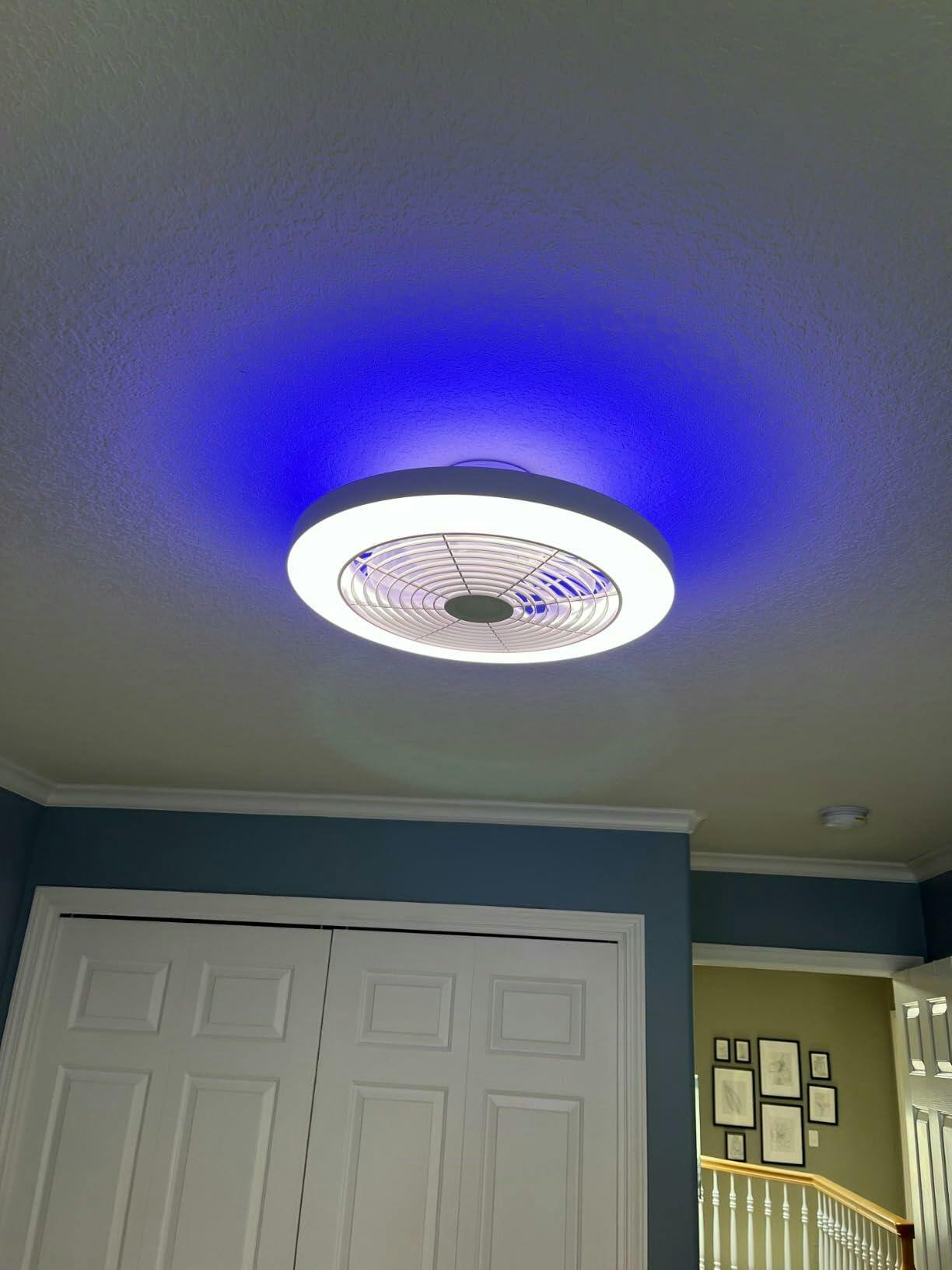
When you shop, compare three things: measured noise at typical speeds, airflow distribution (is the stream laminar or choppy?), and smart controls. Also check build details: motor type, mounting isolation, and grille geometry. If you want a practical example, consider a modern bladeless fan with light that blends air multiplier design with a DC motor and Alexa compatibility — it shows how integration can be done well. Look for products with clear CFM-to-dB curves and firmware that smooths speed transitions.
Alternatives and complementary solutions
Not every situation needs a bladeless unit. High‑ceiling commercial spaces may prefer axial fans with larger diameters for efficiency. Desktop or tower units can supplement targeted cooling. In multi‑room homes, pairing quiet ceiling fans with smart thermostats yields best results. The key: match the technology to the use-case, not the showroom aesthetic.
Three golden rules for choosing quiet, efficient fans
1) Prioritize measured performance: request in-room dB and CFM curves at relevant speeds. 2) Demand integration testing: ensure the fan’s controls, motor, and mount were validated together. 3) Value control finesse: smooth PWM or vector control beats raw horsepower for perceived quiet and comfort.
These rules guide realistic expectations — and help you avoid flashy specs that underperform in daily life. For solutions that combine thoughtful acoustics, solid motor engineering, and smart home features, consider how brands translate that work into real products. Orison often aligns engineering with lived comfort — practical, not just theoretical. —