Introduction — a question of air, health and cost
Have you ever paused in the middle of a busy workshop and wondered who pays for the air you breathe? Recent site audits I’ve seen in Nairobi and Mombasa showed particle counts spiking near engraving benches after just two hours of work — and that raised a real problem. The laser marking fume extractor sits nearby, humming away, yet workers still report eye irritation and coughing (not good). Data from a handful of small-scale studies suggests particulate matter and VOCs can rise by 30–60% during intense marking runs, so I ask: is the extractor actually doing its job or simply giving managers reassurance?
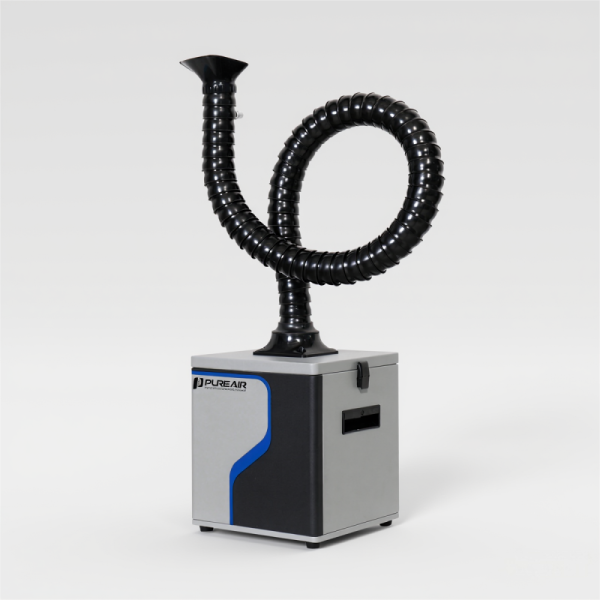
I bring this up because the numbers don’t always match the comfort level on the shop floor. We track airflow rate, HEPA filter status, and simple visual checks, but those alone can mislead. In my experience, a unit that looks well placed may still leave hotspots of contamination around the extraction hood and workstation. So what should a practical workshop leader look for next? Read on — I’ll unpack the problems you might not see at first glance, and suggest clearer ways to judge performance.
Where the old fixes fail: technical faults and user pain
uv laser marking machine setups often come with a “fit-and-forget” extractor. At a glance that seems fine, but let me be blunt: I’ve watched good machines lose effectiveness because installers treated the fume extractor like a passive accessory. Technically speaking, extraction efficiency depends on capture velocity, duct geometry and filter media — not just on the motor’s power. When those elements are wrong, the HEPA filter and carbon filter buck the load, and the system underperforms.
What exactly goes wrong?
Look, it’s simpler than you think: airflow rate drops across bends and long ducts; extraction hoods placed too high miss the smoke plume; and filters get overloaded without proper maintenance schedules. I’ve also seen mismatches between laser wavelength and plume chemistry that change the condensation behavior — meaning particle counters read differently and managers get misleading comfort levels. In short, traditional fixes focus on filter grade and fan size but ignore real-world placement and plume dynamics — and that is where many users hurt.
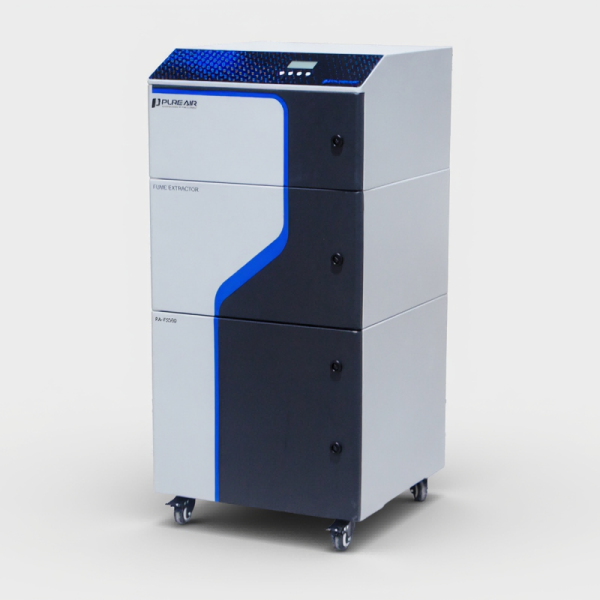
What’s next — practical upgrades and future outlook
In the next wave we should combine better design with smarter sensing. I imagine workstations where a small sensor network watches particulate spikes in real time and adjusts the fume extractor’s fan speed and damper position. That’s not science fiction; edge computing nodes tied to simple particle counters can do this today, and they pair well with modern extraction hoods. In fact, when you pair an uv laser marking machine with adaptive extraction, the results are tangible — less downtime for filter swaps, lower VOC tails, and a calmer shop floor.
What would I advise teams to measure? Three clear metrics: real capture efficiency at workstation height; filter pressure drop over time; and residual VOC levels during peak runs. These give a measurable readout of whether the system truly protects people — and they help pick between models and service plans. Also—funny how that works, right?—regular staff checks and quick training beats pricey, ignored dashboards every time.
Closing — three practical metrics to choose by
To wrap up, I’ll keep this brief and usable. When you evaluate a laser marking fume extractor, focus on these three metrics: 1) capture efficiency measured with a particle counter at operator breathing height; 2) the maintenance curve, shown as filter pressure drop over weeks; and 3) VOC concentration during typical marking cycles. If a system scores well on these, you’ve got a solution that actually protects workers and keeps production steady.
I’ve seen both the wrong choices and the right ones, and I prefer solutions that are measurable and simple to manage. If you want a trusted name to start with, consider how PURE-AIR designs their systems around real use — not just specifications. We owe it to our teams to breathe better air while we mark the parts that keep industry moving.