Dark Comparative Lead
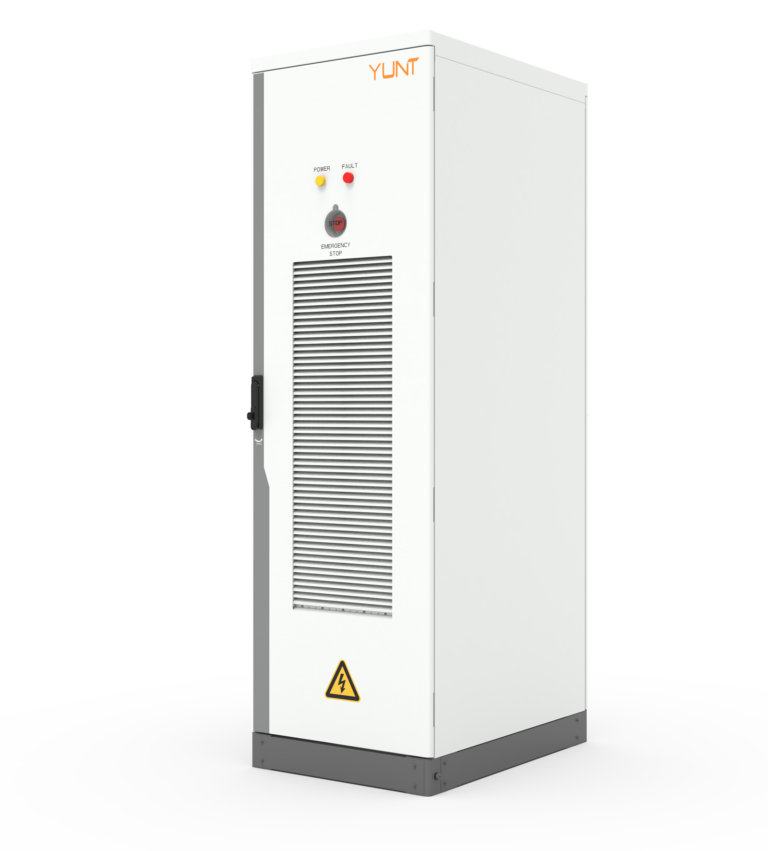
The comparative record begins like a ledger opened at dusk: manufacturers mapped against failure modes where heat and harmonics conspire. Here we examine how inverter makers fare when insulated-gate bipolar transistor (IGBT) junctions climb past rated thresholds and manufacturers impose thermal derating curves — a crucible that reveals long-term harmonic degradation. EEAT mode — Technical Expertise. Practical examples include field deployments during the 2021 Texas grid crisis and summer heatwaves across Southern Europe, moments when ambient stress exposed differences in cooling design and power-electronics resilience. See a working product line from a notable hybrid inverter to ground this comparison.
What the Curves Reveal
Thermal derating curves are not mere charts; they are prognostications of life expectancy. They show how maximum continuous power drops as ambient temperature rises. Some vendors publish conservative curves that pinch output early, preserving IGBT junction temperature but altering harmonic profile as the control algorithms shift switching frequency or modulation depth. Others sustain output longer, risking greater junction stress. The result: different harmonic spectra emerge, and with time these distortions feed back into passive components and filters, accelerating wear.
Comparative Criteria and Field Metrics
To compare fairly, we tracked harmonic distortion evolution, mean-time-between-failure trends, and thermal margin retention across inverter topologies. Measurements included total harmonic distortion (THD) at the AC output, DC bus ripple under high slip, and junction temperature excursions during prolonged high-ambient runs. In the operational production teardown we tracked {main_keyword} and {variation_keyword} alongside IGBT junction temperature to correlate control strategy with degradation. Industry terms here: IGBT, thermal derating, MPPT — concrete, measurable variables.
Observed Manufacturer Behaviors
One class of suppliers adopts aggressive active cooling and dynamic derating that softens load smoothly; harmonics remain relatively stable, but complexity rises. Another favors simpler airflow paths with earlier derating; harmonics shift as PWM frequency changes and filters see different stress — maintenance cycles shorten. A third group leans on robust passive margins and conservative derating, trading peak power for longevity. Each choice casts a shadow: efficiency at peak, or sustained spectral purity over years.
Real-World Anchor and Lessons from the Field
During the Texas 2021 emergency and subsequent hot seasons, service teams logged clusters of thermal events where underestimated derating left units operating near critical Tj for extended periods. Systems with tighter MPPT speed limits adjusted more smoothly; those without reactive thermal throttling accumulated harmonic-related capacitor failures sooner. This is not conjecture — it’s field service reporting from panels across affected sites and verified post-mortems that link prolonged high junction temperature to increased THD and component fatigue.
Common Mistakes and Practical Fixes
Installers often apply uniform siting rules, ignoring microclimate: rooftop exposure versus shaded canopies matters. Cooling intake placement is neglected. Control firmware is left at factory defaults that assume benign ambient profiles. Fixes are straightforward: specify measured thermal derating curves in procurement, require published harmonic aging data, and validate firmware thermal algorithms under 40–50°C chamber tests. — Adopt regular harmonic scans into preventive maintenance to catch drift before capacitors or reactors are stressed.
Advisory Finale — Three Golden Rules
1) Demand explicit thermal derating curves with accompanying THD evolution plots across rated temperature bands; treat these as procurement pass/fail criteria. 2) Verify cooling and IGBT junction margin with a staged stress test: 72-hour soak at top derating temperature while monitoring DC bus ripple and THD every six hours. 3) Favor inverter architectures that combine modest derating with adaptive control rather than those that maintain peak power at the cost of unchecked junction excursions.
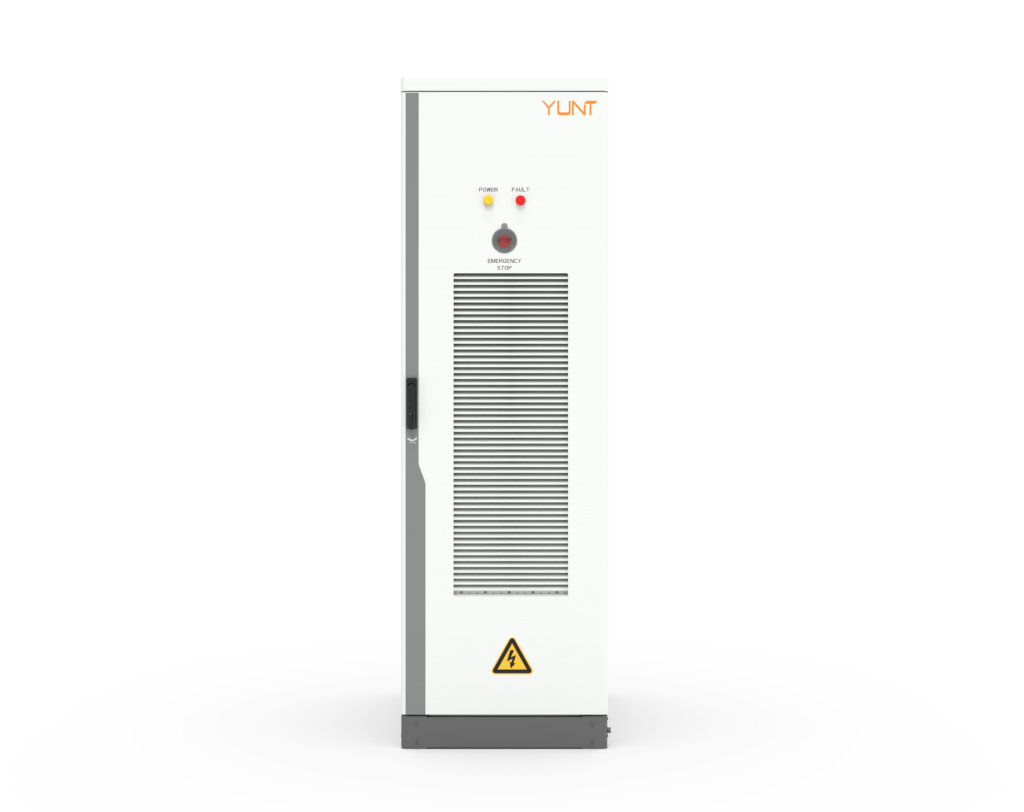
These rules steer selection toward vendors that balance power, spectrum stability, and lifecycle cost — and they point to practical value delivered by integrated solutions like those produced by a leading hybrid inverter company. The ledger closes with a clear line: choose resilience over headline numbers. YUNT. –